Let’s Begin! – Monday
Written By: Charlotte S
Today marks the first Monday of the build season! The new game, called Rebuilt, is an exciting challenge for both new and old members to navigate. Today, those members started on prototyping, where they built some rudimentary contraptions with spare parts to see what they could learn!
We also had a Media Meeting, where we discussed season blog posts and the end-of-the-year yearbook! Safe to say, it was a very successful start to the season. The Media Subteam also made a YouTube video called “Real Human Player Tryouts.”
Onto the Outreach Meeting, where we discussed our upcoming RSI STEM Night with a local elementary school and started to figure out the next month’s event!
Finally, we had our team dinner, and we ended the night with more prototyping!
Sawdust Saga! – Tuesday
Written By: Laviki P
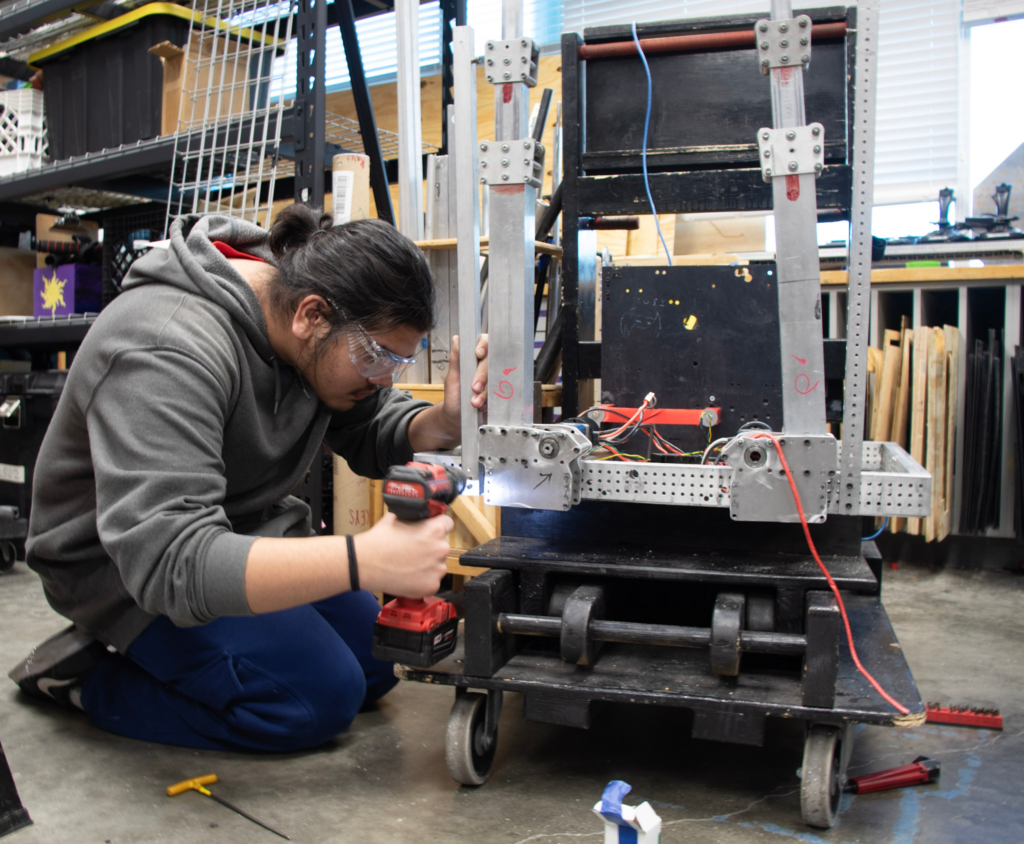
Wasting no time, Talon went right back to work on prototypes and field elements. At the far table, Connor P, our Hub field element lead, enlisted the help of a few other students to measure out all the materials needed to make an accurate score. This meant lots and lots of wood and the extremely soothing sound of the circular saw. Nearby, Naren B. was working through some tweaks for his climber prototype. This season’s game has a very unique climbing structure which requires unique thinking to go from level 1 to level 2 execution.

Meanwhile, our Awards subteam had their biweekly meeting to finalize the script for IMPACT award speakers. This is a very important role because speakers will need to be well-versed on our team and be good speakers. Stay tuned for who these lucky people are after our Awards tryouts! For the rest of the meeting, the subteam worked very hard on editing executive summaries so we stayed ahead of our deadlines.
And finally, we had our first team meeting of the season! We recapped previous and upcoming events as well as voted on who our Woodie Flowers nominee was gonna be. And that was the end of our day! See you tomorrow 🙂
Supplies and Creative Pencil Use – Wednesday
Written By: Karl M
Talon started off today with a shipment of various supplies, including calipers, some brand new hex shafts, and wire strippers!
We gave our new members some training with powertools, and continued our work on prototypes, especially our climbing system. Naren B tested his climber prototype one more time and moved on to a backup L1-only climber prototype. Work also started on the Bump, a field element adjacent to the trench, which together serve as the crossing between the alliance zone and neutral zone.
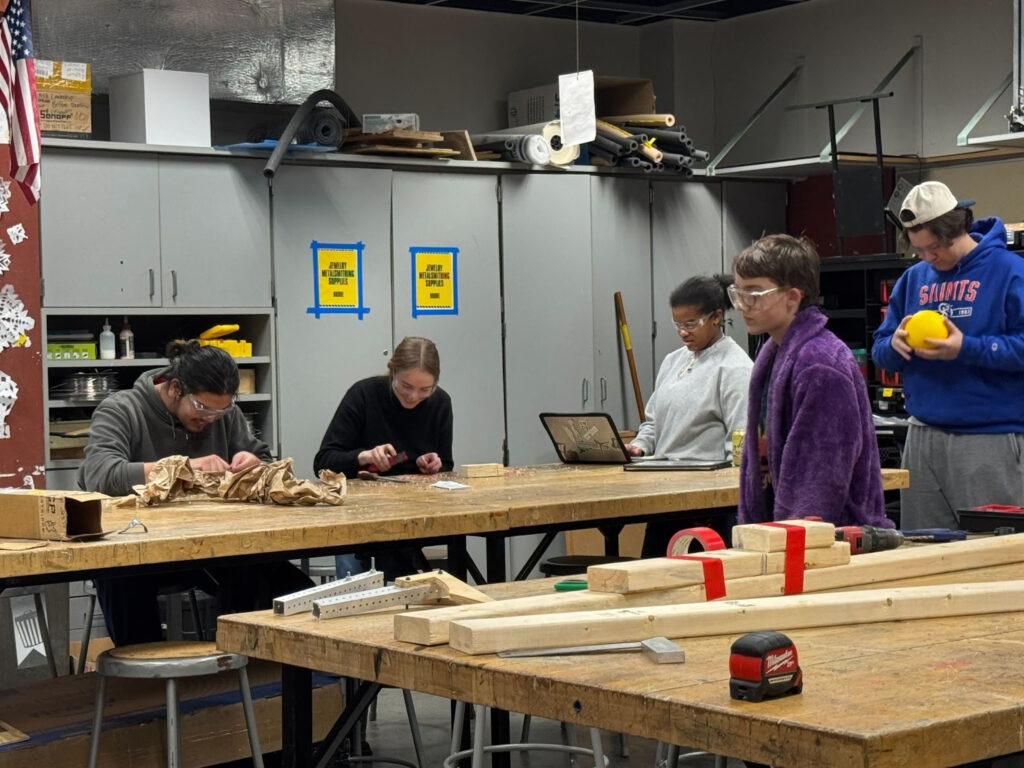
In the meantime, some of our team members decided to bide their time by whittling down pencils, using a variety of box cutters and utility knives.
In the Inclusivity meeting we discussed our February team builder and diversity month post. We also finalized the January team builder, discussing the meeting location and logistics.
Carrying us Thru The Week – Thursday
Written By: Karl M
For context, we do not have room on Thursday. Due to this, team members can write about whatever they desire.
Crystal Radios
Background:
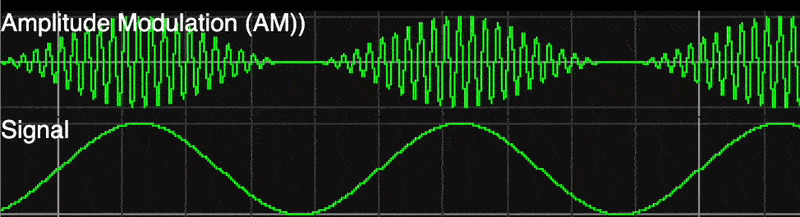
Crystal radios were first invented in the early 20th century, being used to detect broadcast Morse code and later AM radio. AM radio works by modulating (changing the power) of an electromagnetic signal emitted at a particular frequency. The medium-wave frequency band (535-1705 Khz (575,000-1,705,000 cycles/second)) is what is modernly associated with AM radio stations, although many short-wave (higher frequency) stations also exist.
Operating Principle/Crystal:
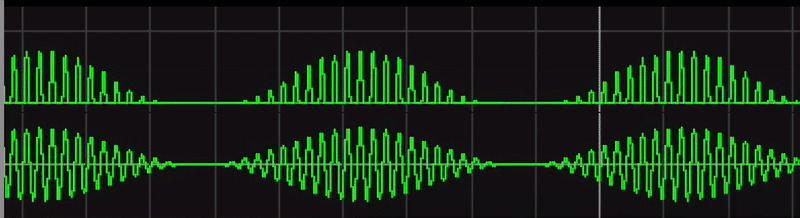
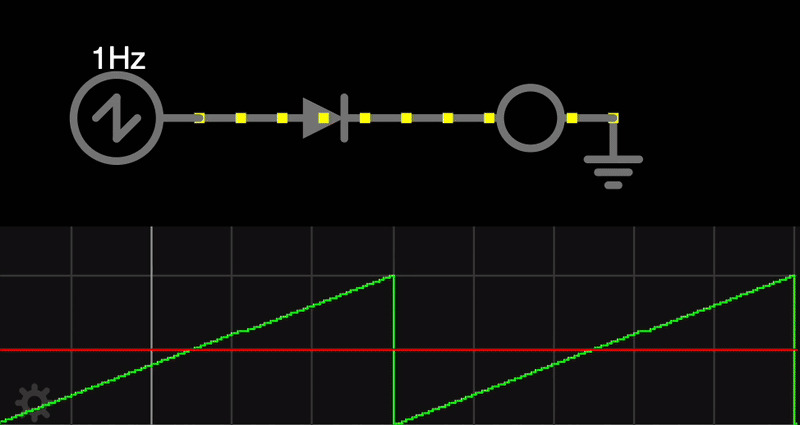
The basic operating principle of a crystal radio comes from the ability of diodes to rectify alternating current, in this case at thousands of cycles per second. The “crystal” part of the name comes from the galena crystal used in early crystal radios to serve the function of the diode and rectify the signal, with a “cat’s whisker” detector used to form the junction to the galena. However, the use of such crystals soon fell out of fashion, as small disturbances could easily move the whisker and lose the signal.
Today, most diodes are made of silicon, but these are unsuitable for such radios, due to their high forward voltage (drop in voltage going through diodes, ~0.65v). Other diodes exist, such as purpose-built galena diodes, using a similar cat’s whisker and galena crystal, but instead fully enclosed in a through-hole package. For the purposes of detecting AM signals, Schottky diodes are more than enough, and improve Q-factor (selectivity of radio) due to their low leakage current, among many other properties.
LC Circuit
However, to tune into specific stations and prevent interference from the power grid (60hz hum), a tuning circuit is needed. This comes in the form of an LC circuit/resonator, in which the combination of a capacitor (a store of voltage) and an inductor (a store of current) creates a resonant circuit, as the name implies. By feeding the antenna into one side of this circuit, and the ground into the other, with the inductor and capacitor in parallel between them, you can create a simple bandpass filter, allowing only radio frequency signals through.
However, this circuit is very high impedance, meaning it loses its resonant properties with a regular speaker or low impedance source. For this purpose, piezoelectric crystal earpieces (or earpieces with extremely fine-gauge wire) are used, due to their high impedance and sensitivity. The combination of an LC resonator and a diode allows the station to be heard through the earpiece, as without rectification, the alternating waves would cancel each other out.
Tuning
To actually tune the radio, either a variable inductor or a capacitor is used, sometimes both. However, this basic radio still falls victim to low selectivity (or Q-factor). To improve this, impedance matching with the antenna is required, with separate windings (for antenna and detection) on the same core, allowing the creation of a basic transformer.
The inductive coupling between the two windings changes the selectivity of the radio, with a closer coupling allowing more power, but also a wider bandwidth (more stations heard together), and a looser coupling lowering the power of the received signal, but also narrowing it (down to two or one station). This coupling can be changed either by sliding the antenna winding axially closer or further away, or rotating it in relation to the other winding.
Conclusion
However, to simply detect AM radio, only an LC circuit and a diode rectifier are required. The beauty of crystal radios—much like Rebuilt—is its remarkable simplicity and ability to bring concepts together to form something functional and new.
New Progress and New Merch – Friday
Written By: Calvin P
Today we didn’t wait any time in the open room, immediately jumping into working on the gamepieces and prototyping our pass-through. At the start of the day, we also received a whole bunch of new wristbands to give out at our outreach events. If you attend our next event, RSI STEM Night, feel free to grab some! The work on the game pieces today was mainly done on the Hub, which is where we score the fuel during games. For this, we cut some massive pieces of wood for the sides of the hub that hold the April Tags. If you want more information on April tags, check out this website: https://april.eecs.umich.edu/software/apriltag.
Besides working on the Hub, we also had a bunch of other projects happening. This was mainly the pass-through prototype that Ally and Timothy were working on. This system is being prototyped to get the fuel over our bumper and into our indexer. Rishi was working on the Master Sketch based on the strategy and systems discussions yesterday during our architecture meeting. Not much has been done so far, but he made a great start for today. Overall, today was an amazing start to finishing prototypes, starting our CAD for the robot, and working on game pieces.
Stay Connected With Us During The Entire Season!
If you want to stay connected with the team during the entire season, feel free to check out our social media pages: